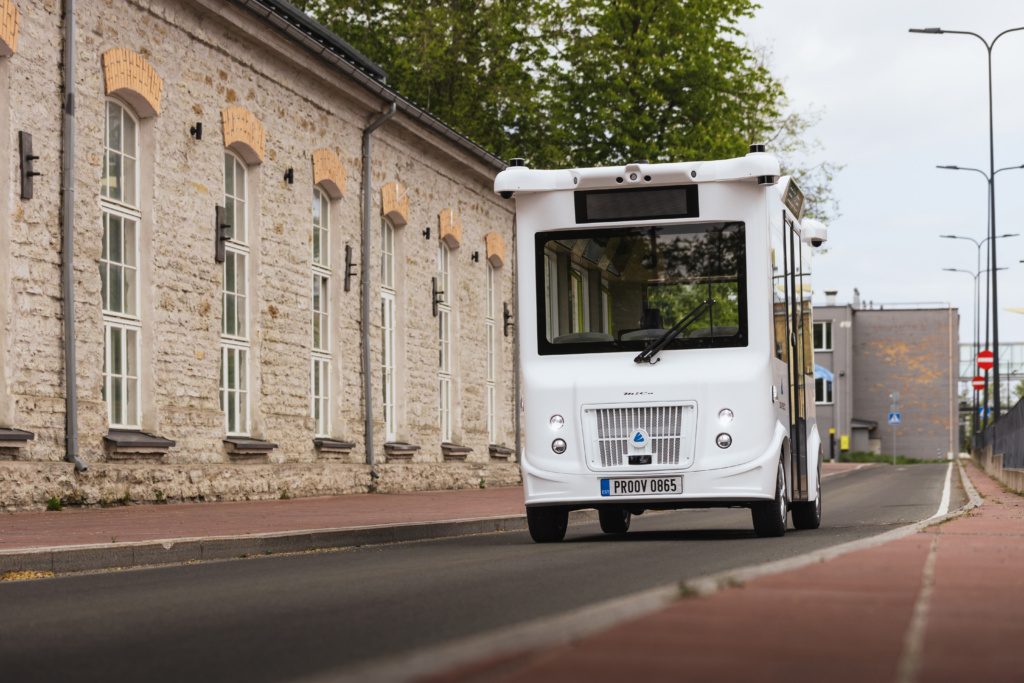
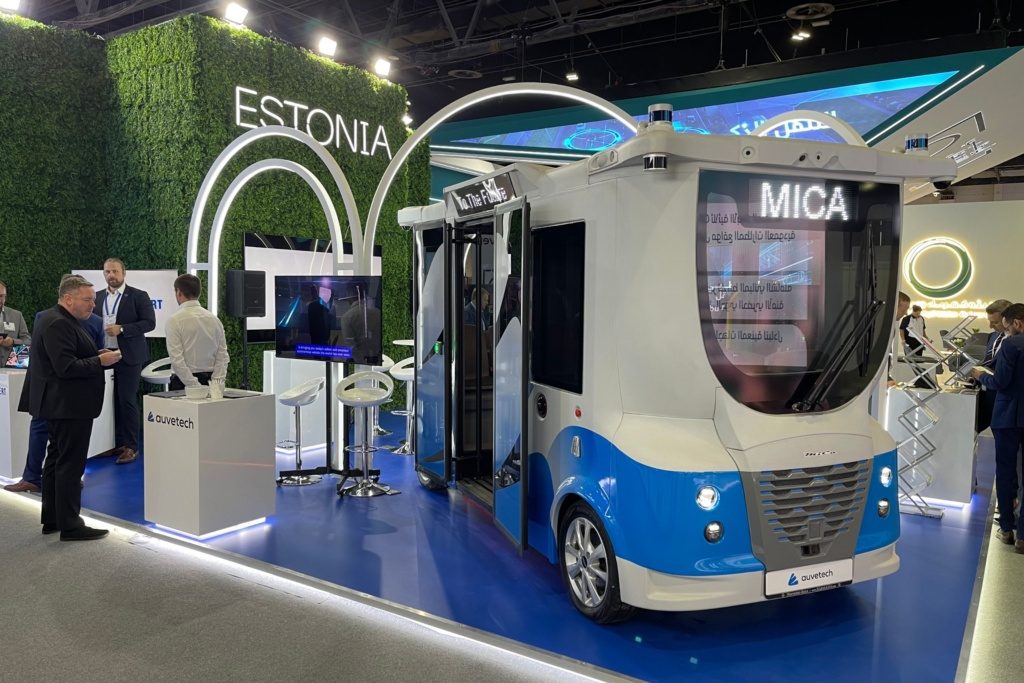
Smarter Autonomous Transportation at Tallinn Airport
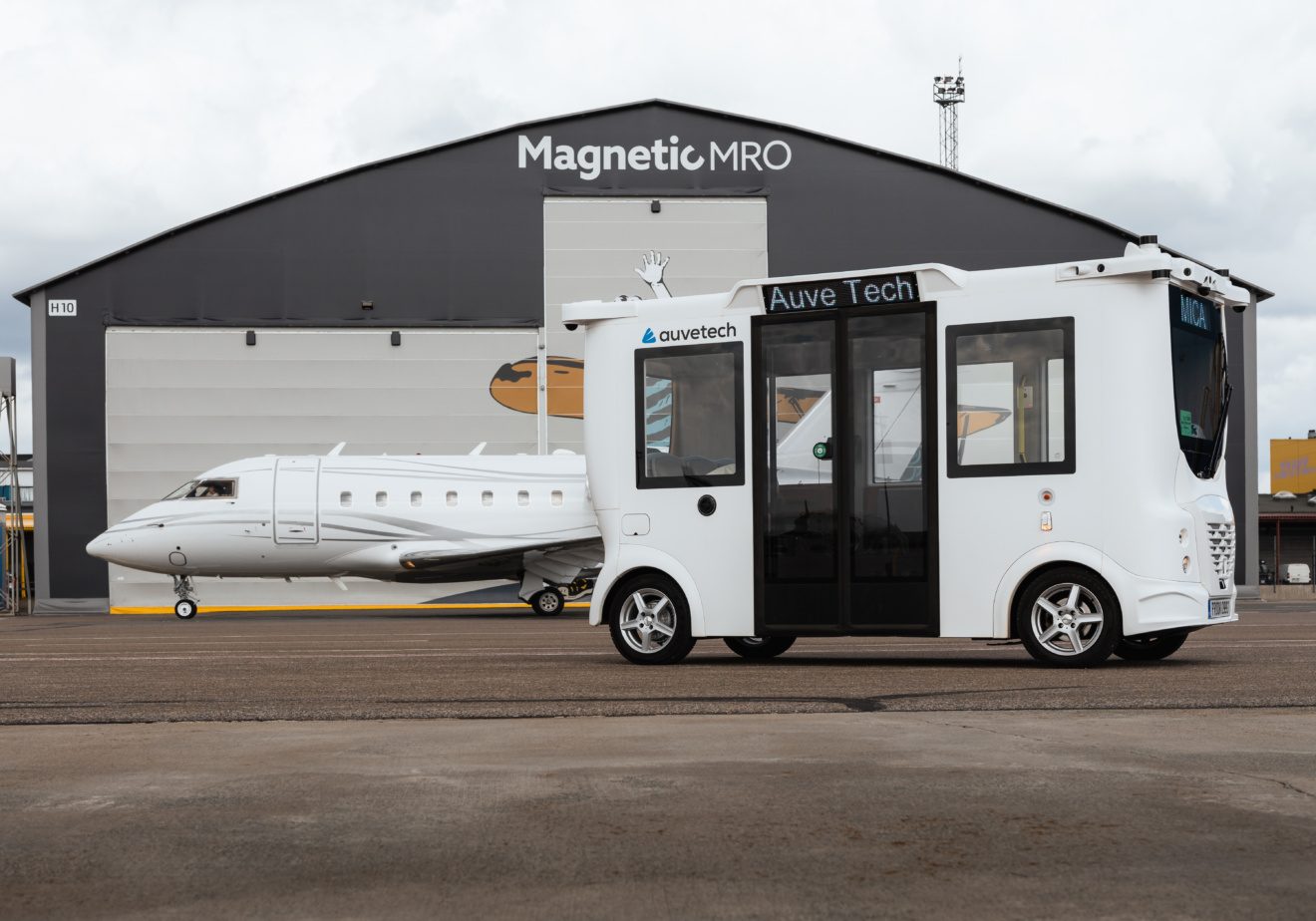
Auve Tech has officially launched its latest autonomous mobility initiative with Magnetic MRO at Tallinn Airport. Marking a major milestone in the evolution of driverless transportation within complex, safety‑critical environments. The project began its formal operational phase on 12 January 2026, following nearly two years of preparatory testing and validation in real airport conditions.
“Magnetic MRO started this collaboration for a practical reason. Internal transport is a constant coordination task and workforce availability is getting tighter. With the technology now proven in real conditions, autonomous transportation is a reliable alternative we can use in day to day operations.”
— Priit Puuram, Head of Technology at Magnetic MRO
Building on Two Years of Autonomous Testing at Tallinn Airport
About Magnetic MRO
Magnetic MRO is a Tallinn-based aviation maintenance, repair, and overhaul (MRO) organization providing comprehensive technical care services for commercial aircraft, engines, components, and related aviation assets. The company supports base and line maintenance, structural modifications, painting, and engine services while also offering asset management and technical training. Magnetic MRO is part of the broader Magnetic Group and serves airlines, leasing companies, and operators worldwide from its facilities in Estonia and multiple international locations.
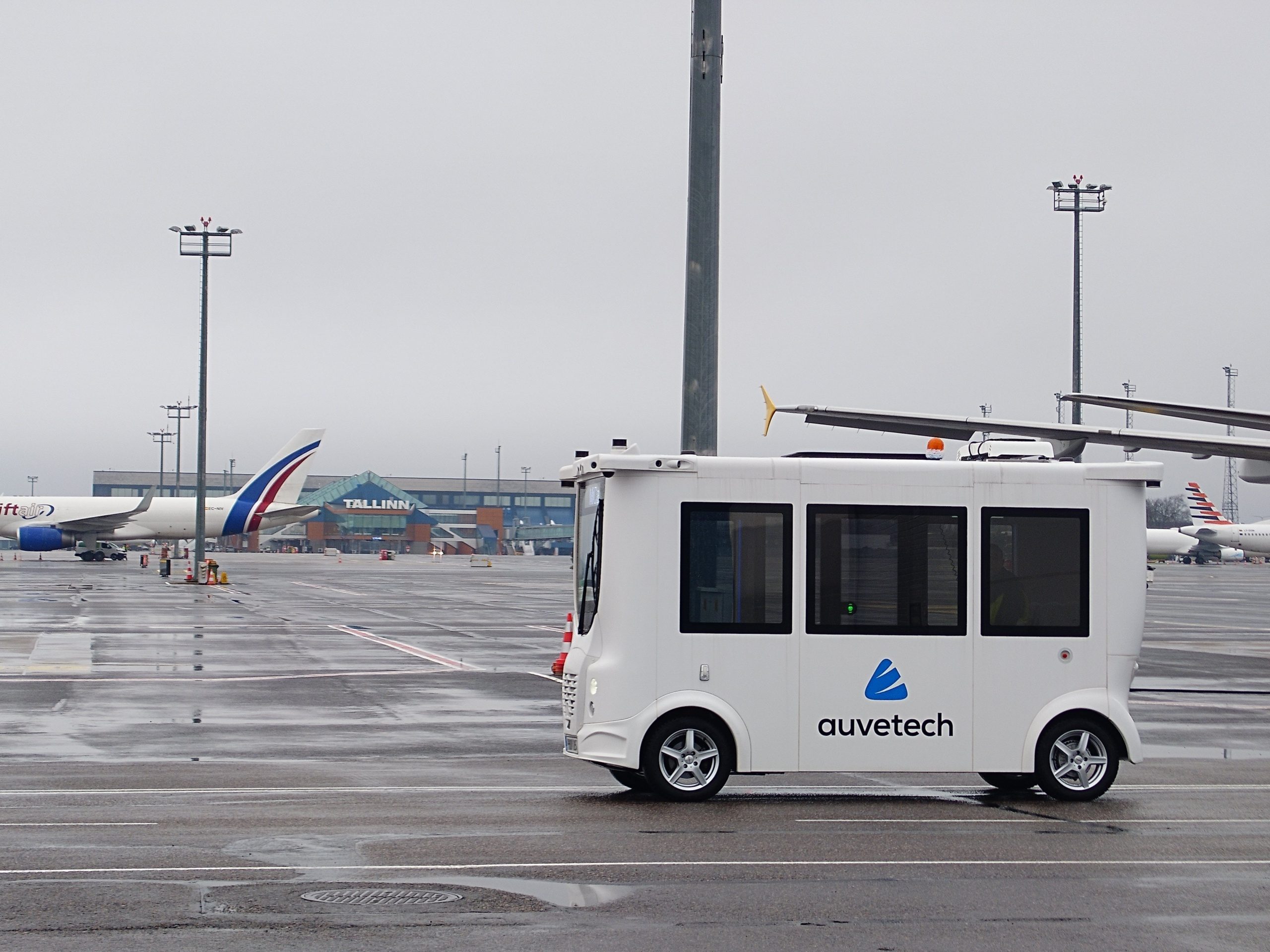
Auve Tech’s presence at Tallinn Airport began in January 2023, when the company initiated testing with its first‑generation autonomous shuttle, Iseauto. These early trials were designed to collect real‑world data, assess infrastructure readiness, and understand the operational and regulatory nuances of airport logistics.
The testing period continued until 11 January 2026, providing a foundation of practical insights into environmental conditions, safety protocols, and human–vehicle interaction within a controlled airport zone. Lessons learned during this phase significantly influenced the development of Auve Tech’s next‑generation vehicle, MiCa , which now serves as the core platform for the new project.
“Innovation matters only if it works in real operations. Our environment lets technology companies validate their systems, and it helps us get proven solutions to real world problems faster, improving efficiency and reducing reliance on manual tasks. Comfort zones do not keep companies competitive, new solutions do.”
— Priit Puuram, Head of Technology at Magnetic MRO
Introducing a New Route Connecting Magnetic MRO Facilities
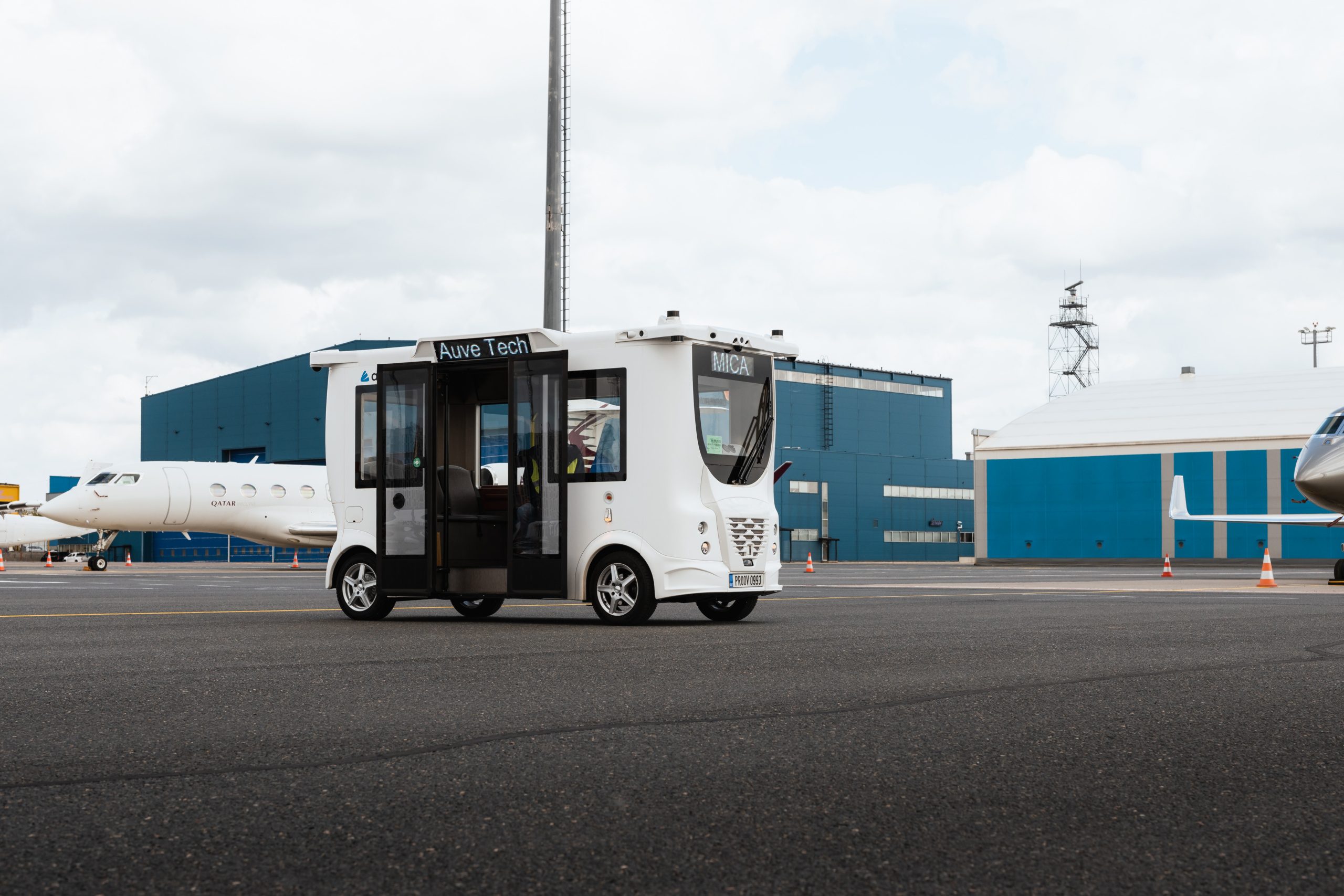
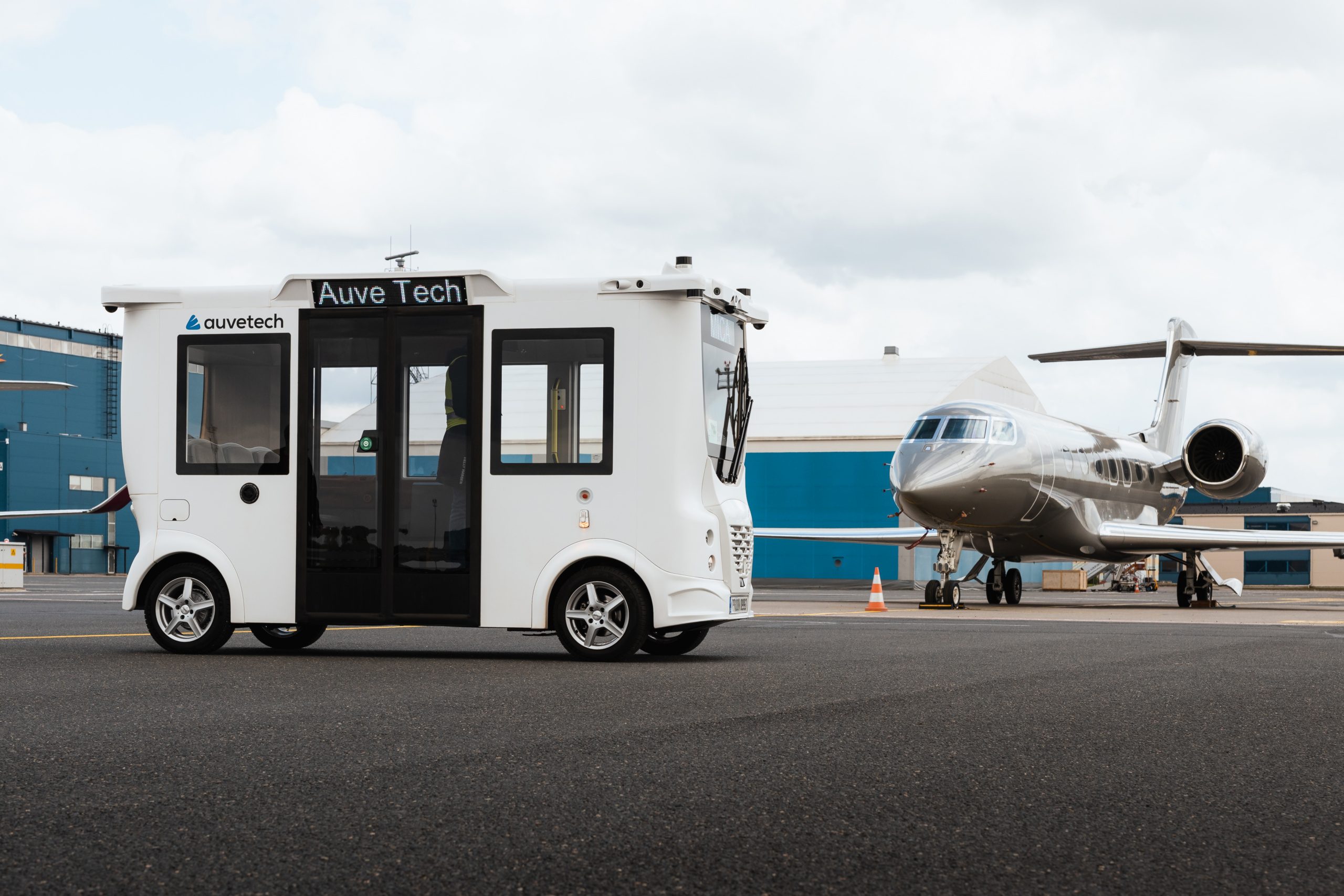
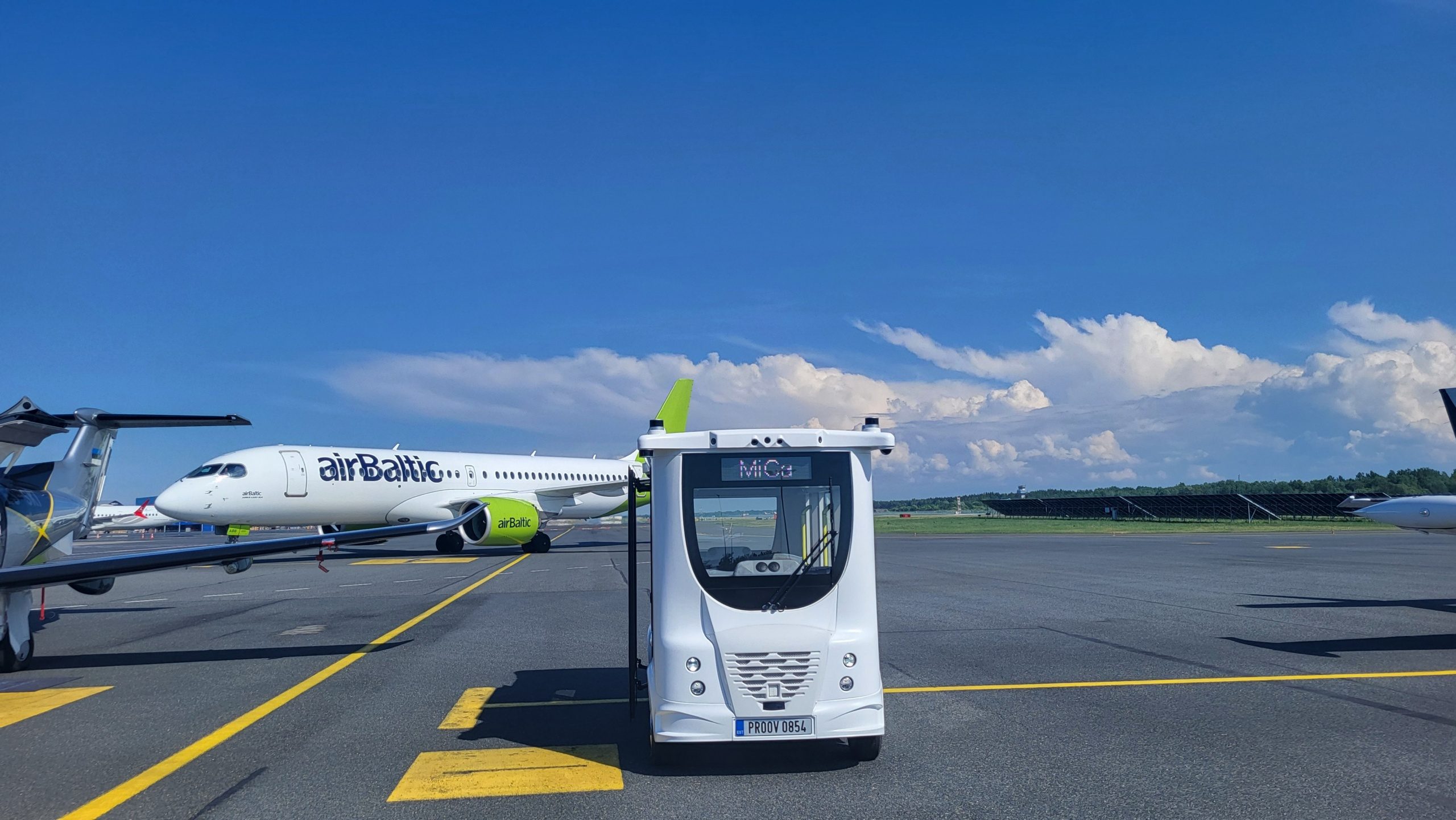
As part of the newly launched operational service, MiCa operates on a 9 km round‑trip route, equipped with two designated bus stops. While these are the official stops, MiCa can also halt at additional locations along the route when required. This route links two primary Magnetic MRO hangars, supporting the internal mobility needs of personnel, the transportation of equipment and operational components within the airport’s restricted area.
MiCa serves as a complementary mobility solution, streamlining the movement of employees, equipment and operational components between hangars and key locations to boost internal logistics and operational efficiency.
“Autonomous transportation is not a showcase for Magnetic MRO. It reduces reliance on manual labour, improves visibility of internal transfers, and cuts coordination overhead in daily operations. That means less waiting, fewer ad hoc calls, and more time spent on maintenance work.”
— Priit Puuram, Head of Technology at Magnetic MRO
A Technically Demanding and Pioneering Environment
Operating autonomous vehicles in an airport environment is exceptionally complex. The presence of active aircraft, strict safety regulations, and sensitive operational zones creates a setting where every movement must be controlled and verified to the highest standards.
This project stands out because:
- Autonomous vehicles operate in proximity to aircraft and aviation infrastructure, a scenario demanding precision and reliability.
- The environment requires stringent safety, operational compliance, and real‑time decision-making.
- MiCa represents a significant technological leap from Iseauto, offering enhanced perception, autonomy, and operational robustness.
Notably, in 2023, Auve Tech became the first company ever to operate an autonomous shuttle within the airport area. The new project, however, moves beyond experimental testing. MiCa is now positioned to provide consistent, scalable transportation services for operational needs.
The Role of Auve Stack 2.0
MiCa operates using Auve Stack 2.0, the advanced autonomy software that enables safe and reliable performance in such a demanding environment. It serves as the core intelligence behind MiCa’s driving capabilities. The software includes:
- Predictive detection of pedestrians and unexpected objects
- Enhanced vehicle control for smoother, more accurate navigation
- Autonomous handling of intersections and crosswalks
- Dynamic overtaking and speed‑bump recognition
- Multi‑sensor fusion combining lidar and camera data for precise perception
These capabilities are essential for navigating restricted airport zones, where every decision must meet strict safety and operational requirements. Auve Stack 2.0 enables MiCa to operate proactively—anticipating its environment rather than merely reacting to it.
Why This Project Matters
For Auve Tech
The airport project holds significant strategic importance and represents a key step in demonstrating the real-world applicability of autonomous transportation solutions. This initiative reflects a broader global shift: autonomous mobility—whether in closed environments such as airports or in open traffic scenarios—is no longer a future concept, but an operational reality already being deployed and utilized on a daily basis.
“This marks one of the first fully operational autonomous shuttles in a live airport setting, evolving from two years of rigorous testing (since 2023) into everyday service. It proves that autonomy has moved beyond pilots and prototypes into real-world, high-stakes aviation use, delivering predictable, scalable transport with teleoperation-ready architecture for eventual driverless scaling.
In short, Tallinn Airport’s MiCa project clearly shows that autonomous ground mobility in aviation is no longer experimental: it’s mature, resilient, and actively enhancing safety, efficiency, and resource allocation in complex airport ecosystems today.”
— Deivis Sepp, Fleet Operations Lead at Auve Tech
For Tallinn Airport and Magnetic MRO
The project delivers tangible value by improving internal mobility and supporting continuity of operations in an environment where workforce availability is becoming increasingly constrained. Autonomous transportation solutions help reduce dependency on manual transport tasks, allow personnel to focus on higher-value activities, and contribute to more predictable and reliable internal logistics.
At the same time, the project enables MRO operations to benefit from safer, more consistent, and scalable transportation services within the airport area. By operating in a controlled and safety-critical environment, Auve Tech demonstrates its ability to meet high operational standards while delivering practical benefits. Overall, the project strengthens collaboration between technology providers and airport operators and supports the long-term evolution of airport operations toward smarter, more resilient mobility solutions.
The project supports the airport’s long-term operational resilience. Workforce shortages in internal transport roles have been growing since 2023, making autonomous mobility a valuable asset:
- It introduces predictable, safe, and scalable transport within the airport area.
- It enhances internal logistics and operational efficiency.
- It reduces pressure on limited human resources.
- It allows employees to focus on higher-value activities.
A Vision That Began in 2023
The concept for the project emerged during initial testing at Tallinn Airport. It became clear that autonomous transportation could help address emerging workforce constraints in airport logistics. This insight transformed the early experiments into a forward-looking strategy built on the understanding that autonomous mobility in airports is not a question of if, but when.
Next Steps: Moving Toward Fully Operator-Free Operations
The upcoming phase of the project focuses on the removal of the onboard safety operator. MiCa is fully teleoperable, meaning the presence of an operator inside the vehicle is no longer a technical necessity. The transition will be gradual, carefully coordinated, and aligned with regulatory requirements.
Beyond operator removal, the project aims to serve as a reference model for global expansion, with the goal of deploying similar autonomous transport solutions at other airports around the world. Each deployment will be adapted to local infrastructure and operational needs, supporting the broader evolution of autonomous mobility in aviation environments.